

ECONOMICS
The article presents a brief description of the study results on combating illegal entrepreneurship based on a pyramid scheme. The aim of the study is to recognize the problems, identify barriers, and model measures to combat illegal entrepreneurship based on a pyramid scheme. The study identifies and describes the main barriers to combating the aforementioned entrepreneurship. Taking into account these barriers, a conceptual economic and mathematical model for combating the illegal activity of pyramid-based entrepreneurs is developed. The study addresses the unique circumstances of pyramid entrepreneurship's emergence and growth, alongside the management of resources employed in countering these organizations. The proposed model can be used by regulatory and law enforcement agencies in developing and implementing effective strategies to combat the illegal activity of pyramid-based entrepreneurs.
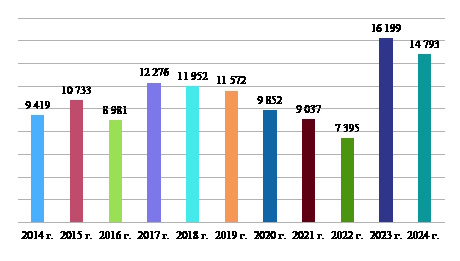
Electric grid companies in Russia operate under financial constraints, increasing accident rates, and declining electricity demand. This study analyzes the investment program of AO "Rosseti Tyumen" and the impact of tariff regulation and lost revenue compensation mechanisms on the company's financial sustainability. Special attention is given to the structure of capital expenditures, sources of financing, and interperiod adjustments of Required Gross Revenue. The results may support the development of regulatory and investment planning approaches in the electric grid sector.
The budget of the Pension Fund of the Russian Federation (since 2023 the Pension and Social Insurance Fund of the Russian Federation (SFR)) is not part of the budgetary system of the Russian Federation. It is formed from insurance contributions: mandatory (paid by employers and individual entrepreneurs for themselves), voluntary (paid by the self-employed), penalties and fines, investment income, and federal budget funds. To ensure a decent standard of living for pensioners, pension provision aims to compensate for lost income due to events such as old age, disability, or the loss of a breadwinner. The subject of this study is the pension system of the Russian Federation and the budget of the Pension Fund of the Russian Federation. The relevance of this research is determined by the importance and social significance of the tasks solved by pension insurance, its current status, and the need for its further reform. Approximately one-third of the country's total population consists of over 40 million pensioners who are financially secured by the state. The purpose of this study is to examine the state of pension provision in Russia. The objectives are to analyze the financial condition of the pension system, budget revenues, and the search for additional sources of replenishment. The information base includes the Russian Tax Code, Rosstat data, reporting data from the Federal Tax Service, the Pension Fund (SFR), and articles on the subject under consideration. The study is conducted using the following methods: analysis and synthesis, grouping, generalization, comparison, tabulation, and others. It is established that the level of insurance pensions is low, the replacement rate is declining, and due to the low base for calculating insurance contributions, their amount is insufficient to generate budget revenue. The federal budget, which is currently experiencing significant difficulties due to Western sanctions and declining demand and prices for oil and gas resources, remains a significant share of the Pension Fund (SFR) budget revenue.
The article explores the system of institutional and economic mechanisms of supply-side economics as a tool for forming Russia's sovereign economy. The main focus is on the systematization and synchronization of various economic regulation tools. The purpose of the study is to analyze the effectiveness of the integrated application of institutional and economic mechanisms within the framework of the supply-side economy model. This study's primary goal is to thoroughly examine and systematize the institutional and economic methods of supply-side economics, viewing them as crucial for the Russian economy's sustainable growth, and to assess how they are currently being applied. A key innovative aspect of the methodology lies in the development of a novel systematization of institutional and economic mechanisms. The results allow for the development of practical recommendations for the creation of industrial development programs, roadmaps for reducing administrative barriers to improve the business environment, accelerate technological development and the competitiveness of domestic producers, and increase the investment attractiveness of regions, including those that have been reunited.
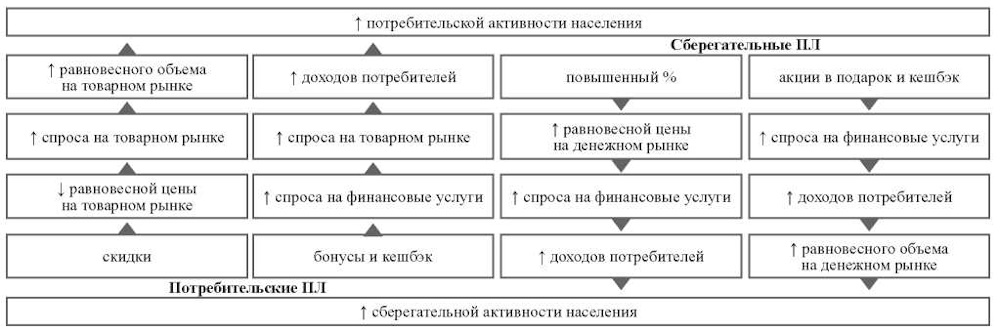
The subject of this study is the financial, economic, and institutional determinants of the impact of loyalty program tools on the economic activity of consumers of financial services. The study aims to assess how cashback affects the economic activity of financial service consumers. Investigating the fundamental concepts of consumer loyalty, loyalty programs, and cashback, this paper proposes and tests several hypotheses regarding cashback's influence on the economic behavior of financial service consumers. The utilized methodologies encompass: analysis of proxy indicators, statistical, econometric, financial, marketing and content analysis, social surveys, formal logic, and additional techniques. Focusing on financial services, consistency, and complexity, the authors' study of loyalty and its economic impact on consumers is marked by an emphasis on the fundamental features of the market and a multifactorial hypothesis testing model with proxy indicators. The research results determine the directions of future scientific research, and the identified unresolved aspects of the problem require clarification and should be the subject of further discussion.
The relevance of the study is driven by the need to identify the underlying causes of persistent regional digital divides in the provision of online public services, despite formally high levels of digital development and the limited effectiveness of infrastructure-centered digital policy measures. To understand how digitalization differs regionally within Russia's Federal Districts, this study aims to evaluate the structural consistency of digital potential elements and their influence on the adoption of online public services. The research objectives include assessing the structural coherence of key digitalization factors across Russian Federal Districts and developing a framework for comparative interregional analysis; substantiating criteria for regional typology; and identifying priority policy directions for regional strategies to improve the performance of digital public services and mitigate existing spatial imbalances. The study employs interregional comparative analysis, statistical assessment of structural asymmetry among digital components, and regional typology methods based on official data provided by the Federal State Statistics Service of the Russian Federation. Greater effectiveness in using online public services is not guaranteed by high levels of individual digital potential components if structural imbalances between them remain, the findings show. Federal Districts characterized by more coordinated development of digital infrastructure, human capital, and business digitalization exhibit higher levels of public uptake of electronic government services, whereas Districts with pronounced asymmetries in digital potential display lower performance outcomes. A classification of Russian Federal Districts is presented, accompanied by corresponding policy suggestions for enacting digital advancement strategies. The study concludes that improving the effectiveness of digital public services requires a shift toward a targeted policy approach focused on eliminating structural digital gaps and synchronizing the components of digital transformation at the regional level.
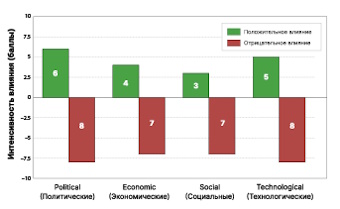
The article examines systemic barriers and the innovative potential of the digitalization of critical infrastructure in the conditions of Arctic single-industry cities. This investigation centers on the infrastructure complex of Norilsk. The purpose of the study is to test a methodological approach to assessing innovative potential and barriers to infrastructure digitalization under extreme natural, climatic, and economic conditions, as well as to develop strategic directions for overcoming the identified barriers. The research is based on the principles of a systems approach and the theory of regional innovation systems. A comprehensive methodology combining PEST and SWOT analyses, as well as the expert assessment method, is applied. Four groups of systemic barriers are identified: technological (9.2 points), economic (8.8 points), institutional (7.1 points), and social and human capital barriers (6.9 points). It is established that technological and economic constraints induce a lock-in effect, which consequently inhibits the deployment of innovations. The case study reveals extremely long payback periods for digitalization projects (12–15 years), which require the use of specialized evaluation methods. Overcoming these barriers requires an integrated organizational and economic mechanism that combines the efforts of the state and business. The results contribute to the theory of regional economics and can be applied to the adjustment of government programs for Arctic development.
LAW
The purpose of this article is to formulate the theoretical foundations for the mechanism of interaction between elements of the public authority system. In this context, the author analyzes existing studies in the scientific literature devoted to the study of the concepts of "interaction" and "legal interaction"; considers the presented options for classifying the interrelations of government bodies both among themselves and with the public. This can be achieved by utilizing research methods such as formal-legal analysis, synthesis, and classification. The approach to the study of interaction in the public authority system is based on: its derivation from the lexical understanding of "interaction" and its specificity in relation to the social and legal sphere; the identification of public authority within the framework of the power system; the use of legislative provisions, the positions of the Constitutional Court of the Russian Federation, as well as options for classifying interaction in general and within the framework of power relations in particular available in the scientific literature when classifying manifestations of interaction between elements of public authority. The result of the study is the formulation of the author's definition of interaction in the public authority system, as well as a classification of its manifestations into spheres, types and forms, with the conclusions supported by examples from current legislation.
The subject of the study is the problems associated with the appeal against court decisions made at the pre-trial stages of criminal proceedings. The goal is to study the procedure for revising interim decisions that are subject and not subject to independent appeal. The objective is to examine theoretical frameworks, diverse viewpoints from procedural scholars, and practical experiences to identify challenges within judicial oversight during the commencement and preliminary investigative phases of criminal proceedings. The methodological base is represented by general scientific and private scientific methods; special attention is paid to formal-logical and comparative-legal methods. It has been determined that considering the same circumstances simultaneously, during both the hearing on the merits and the review of an interim pre-trial court decision, is not adequate.
Contemporary criminological research has traditionally focused on studying crime in various social groups and spheres of activity. However, a special, systemically important, and highly latent segment is the criminality of law enforcers. This phenomenon within criminology has not been adequately researched and has historically been overlooked in scientific examinations. In the context of this article, the authors define law enforcers as individuals vested with state authority to enforce the law, maintain law and order, and administer justice: law enforcement officers, judges, court employees, prosecutors, crime investigators, investigators, bailiffs, lawyers, and notaries, and, more broadly, other officials of regulatory and supervisory bodies. This study’s importance lies in the group’s dual role; they are the primary combatants of crime, yet may also be a distinct origin of it. Disregarding this phenomenon causes a considerable decline in public trust towards the government and discredits the legal system. Thus, a category analysis of law enforcers’ crimes is not only a theoretical but also a pressing practical challenge. The findings enable the formulation of theoretical propositions that enhance and revise the current scientific understanding of law enforcers’ offenses within the Russian Federation. A distinct criminological definition for “criminality of law enforcers” in the Russian Federation is proposed by the authors.
The article examines the application of legal fiction in criminal law. It defines the distinction between this legal category and the criminal law fiction norm. The article demonstrates the integration of a disguised form of legal fiction in the General and Special Parts of the Criminal Code of the Russian Federation, recommendations for its application by the highest judicial authority, and its use in the classification of crimes. The authors' examination of legal fictions within criminal statutes and crime classification leads them to posit that their application can substantially impact the circumstances of affected individuals, either positively or negatively. Furthermore, they contend that in either scenario, the justification or necessity for such application may be either valid or absent. As a result, the authors come to the conclusion that it is necessary to examine the criminal law norms of the Criminal Code of the Russian Federation, which use legal fiction, as well as the recommendations of the Plenum of the Supreme Court on their application, to determine their validity and necessity in order to exclude those norms and recommendations on their application that contradict the established doctrinal principles of criminal law and the rules for classifying crimes.
The article is devoted to the analysis of the fact of exclusion from the unified regulation of the process of establishing and evaluating the application of certain categories of mandatory requirements, which is provided for by Federal Law No. 247-FZ dated July 31, 2020 "On Mandatory Requirements in the Russian Federation". The purpose of the work is to identify the reasons for the creation of special legal conditions for the adoption and modification of certain requirements (conditions, rules, restrictions, responsibilities) governing entrepreneurial and other economic activities. Analysis, synthesis, formal-logical, comparative-legal, and technical-legal techniques constitute the methodological framework. The research findings show that all mandatory requirements share common characteristics, suggesting they should be governed by uniform legal norms. The research revealed that creating special conditions for establishing and evaluating the application of mandatory requirements can lead to very adverse consequences, including contradictory legislative and law enforcement practices. The practical significance lies in substantiating the improvement of legal regulation in order to extend uniform regulation to all mandatory requirements without exception.
The article is devoted to the study of the legal regulation of the turnover of carbon units and related criminal risks in the People's Republic of China, the Republic of Korea, and the Republic of Kazakhstan. The subject of the study is the legal norms governing the functioning of greenhouse gas emissions trading systems as well as criminal law means of responding to illegal acts in this area. The purpose of the work is to identify the features of the legal provision of carbon regulation and the factors contributing to the formation of environmental and economic crime. The foundational methodology encompasses formal-legal, comparative-legal, and systematic approaches. It has been established that the absence of specific constituent elements of crime devoted to violations in climate regulation determines the application of general rules on fraud, abuse of authority, and forgery of documents. The scientific novelty lies in a comprehensive criminological assessment of the turnover of carbon units as an independent area of increased criminogenic risk. It is therefore deemed essential to enhance criminal legislation and preventative strategies in light of carbon market advancements.


